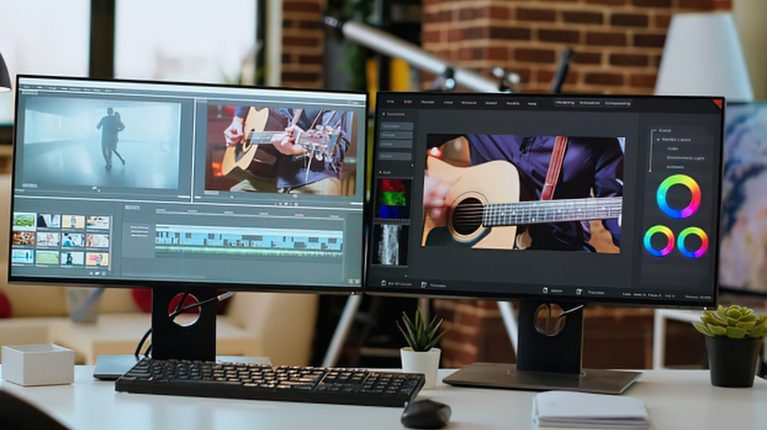
In a world where reality can sometimes feel a bit dull, augmented reality (AR) swoops in like a superhero, transforming the ordinary into the extraordinary. Imagine blending digital magic with the real world, creating experiences that leave users wide-eyed and grinning like kids on Christmas morning. With AR app development services, businesses can step into this vibrant realm, captivating audiences and making their offerings truly unforgettable.
Overview of Augmented Reality
Augmented reality (AR) enhances user experiences by overlaying digital content onto the physical world. Businesses increasingly adopt AR to create interactive environments that captivate users. Users see a blend of reality and virtual elements, leading to memorable interactions.
Developers leverage advanced technologies for crafting AR applications. Tools such as ARKit and ARCore facilitate the development process, allowing for precise tracking and depth perception. Developers integrate 3D models, animations, and geolocation features to enrich the user experience.
AR applications find significant use across various industries. Retailers harness AR to improve shopping experiences by allowing customers to visualize products in real-time. Educational institutions use AR to provide immersive learning opportunities, making complex subjects more accessible. The gaming industry continues to grow with AR features, enhancing user engagement and interaction.
Additionally, marketing strategies benefit from AR. Brands create immersive advertisements that attract attention and encourage user interaction. Data shows a higher retention rate for consumers when exposed to AR content compared to traditional media.
Ultimately, the rise of augmented reality emphasizes its transformative potential. Companies recognizing this trend can gain a competitive edge by integrating innovative AR solutions into their services. With the right development partners, businesses stand to unlock new possibilities through AR applications.
Benefits of Augmented Reality App Development Services

Augmented reality (AR) app development services offer various advantages for businesses striving to enhance their offerings. Companies gain a competitive edge by implementing AR technology.
Enhanced User Experience
AR creates interactive environments, allowing users to engage directly with digital content. Users can visualize products in their real-world settings, bridging the gap between the virtual and physical worlds. Retailers leverage AR to provide customers with personalized shopping experiences. Educational institutions use AR to generate immersive learning opportunities, boosting retention and comprehension. Engaging interfaces make learning processes more enjoyable and effective.
Increased Engagement
AR applications capture users’ attention effectively through immersive experiences. Customers interact with products in real-time, promoting longer engagement with brands. Statistics show that AR users tend to spend 200% more time with content compared to traditional interfaces. Businesses targeting younger demographics find AR experiences particularly appealing. Enhanced interactivity leads to stronger emotional connections with brands, encouraging repeat customers.
Key Features of Augmented Reality Apps
Augmented reality apps offer unique features that enhance user experiences. These key components attract both users and businesses, making AR solutions increasingly popular.
Real-Time Interaction
Real-time interaction is a core feature of AR applications. Users can engage with digital content immediately as it overlays their physical surroundings. This immediate feedback creates immersive experiences, making activities like gaming and shopping more dynamic. For instance, users can virtually try on clothes or visualize furniture in their homes without delay. Consequently, real-time interaction fosters a sense of presence, allowing users to feel connected to both the digital content and their environment. Brands benefit from this increased engagement, leading to higher customer satisfaction and loyalty.
3D Visualization
3D visualization significantly enhances the appeal of augmented reality apps. Users experience lifelike representations of products, making it easier to understand how items will fit into their lives. For example, in retail, potential buyers can see a 3D model of a couch in their living room, allowing for informed decisions. This feature also applies to education, where complex concepts come to life through interactive 3D models. Users grasp ideas quickly when information is presented visually, leading to better retention. Overall, 3D visualization elevates the user experience, transforming mundane tasks into engaging activities.
Popular Tools and Technologies for Development
Numerous tools and technologies facilitate the development of augmented reality applications, enhancing user experiences and driving engagement.
Development Frameworks
Unity and Unreal Engine lead as popular development frameworks for AR projects. Unity provides a user-friendly interface and extensive resources, making it ideal for both beginners and experienced developers. Meanwhile, Unreal Engine offers high-fidelity graphics and advanced features, helpful for creating immersive environments. Companies often choose these frameworks based on the level of detail and performance they aim to achieve. Various extensions support features like physics and AI, enriching the AR development process further.
AR SDKs
AR SDKs play a crucial role in simplifying augmented reality app creation. ARKit, designed for iOS, and ARCore, tailored for Android, are among the most prominent SDKs available. Both SDKs enable seamless tracking of the environment and effective overlay of digital objects. Developers can utilize built-in tools for gestures, image recognition, and rendering, enhancing functionality and user engagement. Improved support and documentation for these SDKs promote efficient development, allowing teams to execute projects with greater success.
Choosing the Right Augmented Reality App Development Service
Selecting an augmented reality app development service requires careful consideration of various factors. The right choice directly impacts project success and overall user experience.
Factors to Consider
Experience in augmented reality development is crucial. Proven expertise demonstrates a team’s ability to handle complex projects effectively. Evaluation of past client projects helps in understanding their design and technical capabilities. Compatibility with business goals enhances collaborative efforts towards achieving desired outcomes. Additionally, flexible pricing models allow for budget considerations, making services accessible for different business sizes. Look for support and maintenance options, as ongoing assistance ensures a smooth user experience after deployment.
Questions to Ask
Asking specific questions helps gauge a service provider’s fit. Inquire about their approach to AR technology and innovation. Understanding development processes lays the foundation for better communication throughout the project. Discuss team composition and expertise levels; a skilled team guarantees high-quality output. Request case studies or examples of previous work to assess their capabilities. Confirm project timelines and milestones; clear expectations ensure timely delivery. Finally, explore post-launch support options to secure assistance long after the app goes live.
The rise of augmented reality is reshaping how businesses engage with their audiences. By leveraging AR app development services, companies can create immersive experiences that captivate users and foster lasting connections. These innovative solutions not only enhance customer satisfaction but also drive brand loyalty, especially among younger demographics.
Investing in AR technology is more than just a trend; it’s a strategic move that positions businesses at the forefront of their industries. With the right development partner, organizations can harness the full potential of augmented reality, unlocking new avenues for growth and engagement. Embracing AR today paves the way for a more interactive and visually compelling future.