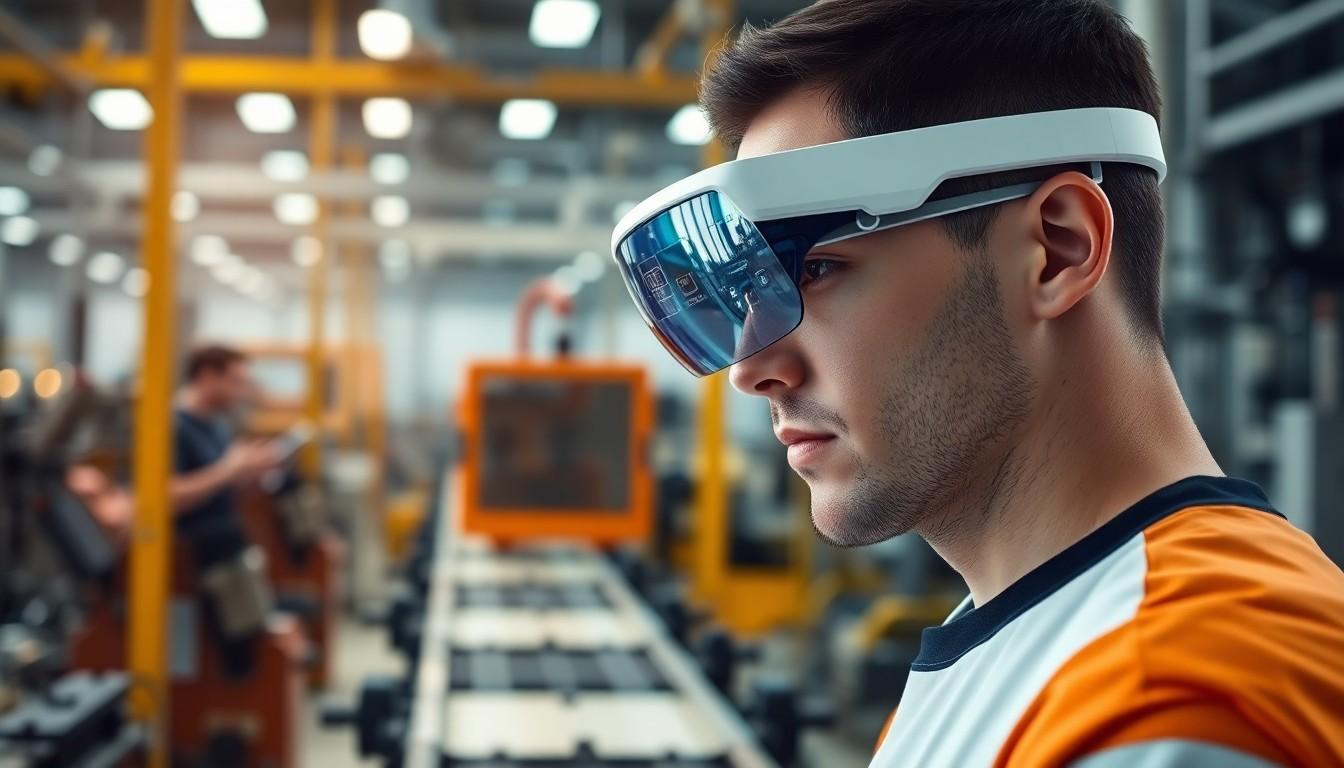
Imagine a world where your factory floor transforms into a high-tech playground, complete with digital overlays that make every task smoother and safer. Welcome to the realm of industrial augmented reality, where mundane operations get a futuristic twist. It’s not just about flashy goggles and fancy graphics; it’s about revolutionizing how industries operate, boosting efficiency, and cutting costs while keeping workers happy and engaged.
Overview of Industrial Augmented Reality
Industrial augmented reality revolutionizes factory operations using digital overlays to enhance productivity and safety. This technology integrates virtual elements with the real world, creating a seamless interactive experience.
Definition of Augmented Reality
Augmented reality refers to technology that superimposes digital information onto the physical environment. Users experience enhanced interactions by viewing digital images, text, or animations through devices like smart glasses or smartphones. Industries utilize augmented reality to visualize complex data comprehensively, creating dynamic, engaging experiences for workers and operators alike.
Importance in Industrial Applications
Industrial applications benefit significantly from augmented reality. Efficiency increases as workers access real-time information without distractions. Training becomes more effective through immersive experiences, reducing onboarding time and improving retention. Maintenance routines gain clarity when technicians see instructions overlaid on equipment, minimizing errors. Enhanced worker satisfaction arises from intuitive interfaces and reduced operational downtime. These factors underscore the transformative potential of augmented reality in industrial settings, driving innovation forward.
Benefits of Industrial Augmented Reality
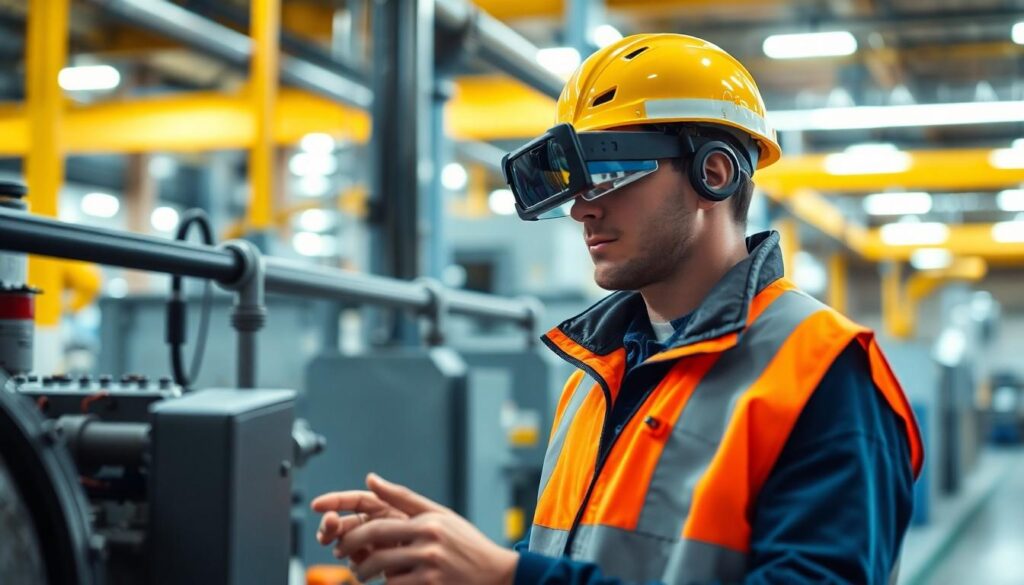
Industrial augmented reality offers significant advantages that enhance operational efficiency and worker experiences. This technology greatly impacts training and maintenance in various industrial settings.
Enhanced Training and Education
Enhanced training occurs through the immersive capabilities of augmented reality. Workers engage with realistic simulations, allowing them to practice skills without the risks associated with live equipment. Training time significantly decreases, enabling quicker onboarding for new employees. Employees gain immediate access to vital information, increasing retention and comprehension of complex procedures. Furthermore, interactive content fosters a deeper understanding of operational tasks, which can lead to higher performance levels in the field.
Improved Maintenance and Repair Efficiency
Maintenance practices improve with the precise guidance provided by augmented reality. Technicians receive real-time overlays that illustrate step-by-step procedures, reducing the likelihood of mistakes. Accessing comprehensive equipment information while working helps identify potential issues before they escalate. Productivity increases, as augmented reality minimizes downtime during repairs and maintenance tasks. Clear visuals enhance the technician’s ability to troubleshoot, shortening the duration of tasks and improving overall equipment reliability.
Key Technologies Enabling Industrial Augmented Reality
Industrial augmented reality relies on a combination of key technologies that enhance its functionality and usability. These elements include both hardware and software solutions that work together to create effective applications in various industrial settings.
Hardware Components
Advanced hardware components are crucial for implementing industrial augmented reality. Smart glasses, such as Microsoft HoloLens and Google Glass, allow users to experience digital overlays directly in their field of vision. Mobile devices, including smartphones and tablets, also support augmented reality applications with their built-in cameras and sensors. Additionally, sensors and cameras provide real-time data and spatial awareness, while powerful processing units ensure rapid processing of complex visual information. Wireless connectivity, such as Wi-Fi and 5G, facilitates the seamless transfer of data between devices and cloud-based systems.
Software Solutions
Robust software solutions underpin the functionality of industrial augmented reality applications. Development platforms like Vuforia and ARKit enable creators to build customized AR experiences tailored to specific industrial tasks. Integration with existing systems, such as CAD and ERP software, enhances data accessibility and utility within augmented environments. Tracking algorithms optimize the accuracy of digital overlays, thus improving interaction with the physical workspace. Cloud-based solutions allow for real-time data access and collaboration among teams, increasing operational efficiency and productivity in industrial settings.
Real-World Applications of Industrial Augmented Reality
Industrial augmented reality demonstrates its value across multiple sectors, showcasing its effectiveness in real-world scenarios. Here are some critical applications.
Case Studies in Manufacturing
Global automotive manufacturers utilize augmented reality for assembly processes. Companies like Ford implement AR goggles to guide technicians during vehicle assembly, reducing errors and enhancing productivity. Another example includes Boeing, which uses AR for wiring harness installation, resulting in a 90% reduction in wiring errors. An industrial equipment manufacturer implements AR for remote assistance, allowing experts to provide immediate guidance to on-site workers. Such practices exemplify how industrial augmented reality streamlines processes while improving both accuracy and safety in manufacturing environments.
Applications in Logistics and Supply Chain
In logistics, augmented reality enhances inventory management systems. For instance, DHL employs AR to optimize order picking, enabling workers to locate items quickly and reducing travel time by up to 30%. Real-time data overlays facilitate efficient tracking of assets, allowing for precise forecasting and inventory management. Furthermore, warehouses using AR-assisted navigation systems report improved picking speeds and fewer errors during shipments. Organizations that leverage this technology enhance their supply chains, ensuring timely deliveries and increased operational efficiency.
Challenges and Limitations
Challenges exist that limit the widespread adoption of industrial augmented reality. These challenges hinder the full realization of its potential benefits.
Technical Barriers
Technical barriers impede the implementation of augmented reality in industrial settings. High costs associated with advanced hardware can restrict access for smaller companies. Insufficient network infrastructure, particularly in remote areas, limits data transfer capabilities. In addition, software compatibility issues arise when integrating AR solutions with existing systems. Workers may face difficulties in adapting to new AR technologies without proper training and support. Data privacy and security concerns present additional challenges, as companies must ensure that sensitive information remains protected during its use in augmented reality applications.
Adoption Resistance
Adoption resistance often stems from a lack of understanding of augmented reality’s benefits. Employees and management may hesitate to embrace AR due to concerns about job displacement or changes in workflow. Cultural resistance within organizations can obstruct the integration of new technologies, as some workers prefer traditional methods. In some cases, insufficient evidence of a solid return on investment may deter companies from investing in AR solutions. Comprehensive training and clear demonstrations of AR’s benefits are crucial in addressing these concerns and fostering acceptance among industrial workers.
Industrial augmented reality is poised to reshape the future of manufacturing and maintenance. By merging digital elements with real-world environments, it enhances efficiency and safety while transforming training and operational processes. As companies like Ford and Boeing demonstrate, the practical applications of AR lead to significant reductions in errors and increased productivity.
While challenges exist, such as high costs and adaptation hurdles, the potential benefits far outweigh these obstacles. With proper training and a clear understanding of its advantages, organizations can harness the power of augmented reality to drive innovation. Embracing this technology not only improves worker satisfaction but also positions companies for success in an increasingly competitive landscape.