
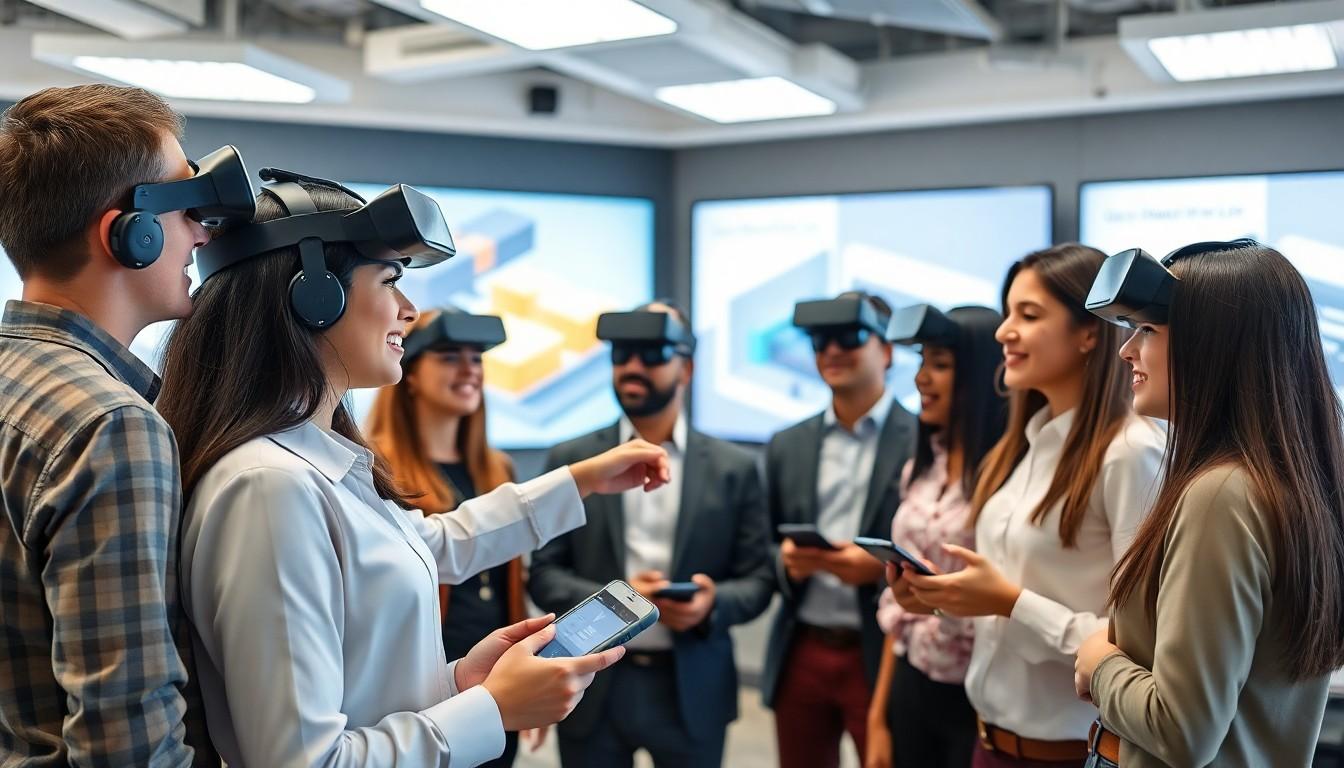
Imagine stepping into a training session where you’re not just reading about procedures but actually experiencing them in a 3D world. Augmented reality training is revolutionizing how organizations teach their employees, blending the digital and physical realms to create immersive learning experiences. It’s like giving your brain a high-tech upgrade—no software installation required!
Overview of Augmented Reality Training
Augmented reality training leverages cutting-edge technology to create rich, interactive learning experiences. It integrates digital elements into the real world, enhancing the educational process. Participants gain the ability to practice skills in a realistic setting, which boosts retention and understanding.
Statistical data indicates that immersive training environments increase learning efficiency significantly. According to recent studies, organizations that implement AR training report up to a 70% improvement in knowledge retention rates over traditional methods.
Augmented reality training benefits various industries, including healthcare, manufacturing, and retail. In healthcare, AR enables medical professionals to practice surgical procedures in a safe environment. Similarly, manufacturing workers can familiarize themselves with equipment without the risks associated with real machinery. Retail employees utilize AR for customer service training, offering insights into product features and best practices.
Cost-effectiveness serves as another advantage of AR training. It reduces the need for physical resources, such as training materials and equipment, minimizing expenses while maximizing impact. By utilizing AR, organizations can achieve more with fewer financial resources.
As interest in augmented reality continues to grow, innovation in training solutions is likely to expand. Developers focus on improving user experience, ensuring the technology remains accessible and impactful. Training programs that utilize AR enhance employee engagement and competency, leading to a more skilled workforce.
Benefits of Augmented Reality Training

Augmented reality training offers numerous advantages that enhance learning efficiency and engagement.
Enhanced Engagement
Engagement during training sessions sees a significant boost with augmented reality. Learners actively interact with realistic scenarios, making the process more captivating. This immersive experience promotes curiosity and involvement. Participants often report that AR training is more enjoyable compared to traditional methods. Engaging narratives and interactive visuals hold attention, encouraging deeper exploration of concepts. Employees feel motivated to participate fully when they can visualize and manipulate elements in a three-dimensional space. This increase in engagement plays a crucial role in fostering a collaborative learning environment.
Improved Retention Rates
Retention rates improve markedly through augmented reality training. Studies indicate that organizations experience up to a 70% increase in knowledge retention compared to conventional training methods. When learners practice skills in a realistic setting, they form stronger connections to the material. This hands-on approach facilitates immediate feedback and reinforces learning outcomes. As a result, knowledge becomes more transferable to real-world situations. Engaging with AR content leads to deeper cognitive processing, cementing information in long-term memory. Enhanced retention ensures that employees apply their skills effectively, contributing to overall organizational success.
Applications of Augmented Reality Training
Augmented reality training transforms various sectors, enhancing skill development and knowledge retention.
Healthcare
Healthcare professionals utilize AR training to simulate complex surgical procedures. Surgeons can practice techniques in a safe, controlled environment without risk to patients. This hands-on experience fosters greater understanding of anatomical structures and surgical instruments. With studies indicating a 70% increase in retention rates, medical workers learn critical skills effectively. Additionally, AR aids in patient education by visualizing treatment processes, improving communication and understanding.
Manufacturing
In the manufacturing sector, AR training enhances operational efficiency and safety. Workers interact with digital representations of machinery, gaining experience without exposure to hazards. Learning how to assemble or troubleshoot equipment becomes seamless through guided tutorials. Organizations report significant reductions in training time, allowing employees to reach full productivity quickly. Moreover, AR facilitates ongoing training, enabling workers to adapt to new technology as it emerges.
Education
Educational institutions are increasingly adopting AR training to enrich learning environments. Students engage with interactive simulations that illustrate complex concepts, making abstract ideas tangible. Enhanced retention through immersive learning experiences allows students to grasp subjects more effectively. Feedback from educators indicates a notable rise in student participation and interest. AR applications extend to virtual field trips and historical reenactments, offering valuable context to academic content.
Challenges in Implementing Augmented Reality Training
Augmented reality training faces several challenges that hinder its widespread adoption. Understanding these obstacles helps organizations navigate the implementation process more effectively.
Technical Limitations
Technical limitations present significant barriers to augmented reality training. Users may encounter issues with hardware compatibility, such as varying performance levels across devices. Software requirements can also strain existing IT infrastructure. Inconsistent user experiences arise from differences in AR applications, impacting usability and learner engagement. Furthermore, connectivity problems in areas with low bandwidth impede seamless interactions during training sessions. Organizations must address these challenges to ensure a smooth onboarding process and achieve desired training outcomes.
Cost Considerations
Cost considerations pose a critical challenge when implementing augmented reality training. Initial investments in AR technology, software development, and content creation can be substantial. Organizations may require specialized hardware that further increases expenses. Budget constraints often lead to prioritizing other training methods over AR solutions, even though data shows immersive training offers significant benefits, including up to a 70% improvement in retention rates. Long-term costs associated with maintenance and updates add another layer of complexity, making careful financial planning essential for businesses venturing into augmented reality training.
Future Trends in Augmented Reality Training
Advancements in augmented reality training signal a shift towards more personalized and adaptive learning experiences. Companies are integrating artificial intelligence and machine learning with AR to tailor training modules to individual employee needs. This customization ensures a more relevant experience, enhancing learning outcomes.
Increased collaboration features play a crucial role in future trends. Teams can engage in shared augmented environments, facilitating real-time collaboration on tasks and projects. This collaborative approach leads to improved communication and teamwork skills among employees.
Mobile AR applications are gaining traction as well, allowing learners to access training materials anytime, anywhere. Such flexibility caters to diverse learning environments, whether on-site or remote. It supports the growing trend of hybrid work models prevalent in many industries.
Moreover, organizations are focusing on data analytics to measure training effectiveness. Tracking employee progress and engagement levels enables companies to refine their AR training strategies. This data-driven approach helps in making informed decisions, ultimately leading to better training investments.
Virtual reality’s integration with AR is also on the rise. Combining these technologies creates immersive simulations that replicate real-world scenarios. Such experiences prepare employees for high-stakes situations, particularly in fields like healthcare and emergency response.
Enhancements in hardware technology are expected to reduce costs and increase accessibility. With more affordable AR devices available, wider adoption across various sectors becomes feasible. This accessibility allows even small businesses to leverage the advantages of AR training solutions.
Finally, continuous improvements in AR content development will enrich training modules. As developers create more engaging and interactive experiences, employee motivation and retention rates are likely to rise further. Organizations stand to benefit from the effectiveness of such innovative training solutions.
Augmented reality training is reshaping the landscape of employee education. By blending digital and physical environments, it fosters engagement and enhances learning retention. This innovative approach not only streamlines training processes but also prepares employees for real-world challenges effectively.
As organizations continue to embrace AR training, the focus on personalized learning experiences will likely grow. The integration of advanced technologies will further enhance the effectiveness of training programs. With its proven benefits across various industries, AR training stands as a vital tool for developing a skilled and adaptable workforce. Embracing this technology can lead to significant improvements in operational efficiency and employee satisfaction.


